I started this blog to share some of the thoughts I have along the journey of life. I love to travel and spend time with my family and friends. A good meal, breaking bread with those I love, gives my life meaning. So does travel. I adore dreaming of sites to visit, not just to check them off on a list. Rather, I consider myself a student of life, traveling as an explorer, to open my mind to all the possibilities the world holds in store for me and for others. I love to travel to discover how different the world is in terms of climate, cultures, politics, terrain, economy, etc. but also to discover how SIMILAR the people are. Despite language barriers, much can be communicated with a smile or gestures. Language is simply a means to communicate, yet there are so very many other ways to communicate. Once when I was in French-speaking Canada, I realized that my 7th grade French class didn’t teach me the word for “straw”. However, when I thought about it, I was able to communicate to the very French-speaking waiter in a very French-speaking restaurant about my need for a “cylinder through which to drink” in my limited French vocabulary. Travel challenges the mind and soul, stretching us to problem solve and form conclusions about all that we experience. THAT is the type of travel I enjoy best. “All’s well that ends well”, as they say………….”Life is Good” as well.
Every now and then something crosses my desk that causes me to pause a moment. Today I am sharing something that did just that when my friend in Belgium shared it with me.
“Barely the day started and… it’s already six o’clock in the evening. Barely arrived on Monday and it’s already Friday. … and the month is already over. … and the year is almost over. … and already 40, 50 or 60 years of our lives have passed. … and we realize we lost our parents, friends. and we realize it’s too late to go back… So… Let’s try to make the most of the time we have left… Let’s keep looking for activities that we like… Let’s put color in our grey… Let’s smile at the little things in life that put balm in our hearts. And despite everything, we must continue to enjoy with serenity this time we have left. Let’s try to eliminate the afters… I’ll do it after… I’ll say after… I’ll think about it after… We leave everything for later as if ′′ after ′′ is ours. Because what we don’t understand is that: Afterwards, the coffee gets colder… Afterwards, priorities change… afterwards, the charm is broken… afterwards, health passes… after, kids grow up… after, parents get old… Afterwards, promises are forgotten… after, the day becomes the night… after, life ends… And then it’s often too late…. So… Let’s leave nothing for later… Because in the meantime we can lose the best moments, the best experiences, best friends, the best family… The day is today… The moment is now…”
the “Rooster Tail” in the wake of my friend’s boat (photo by C.B.J.)
There are many things that take my breath away and cause me to reflect upon how fortunate I am. Last night was one of those magical moments. My friend called me last night to tell me the bioluminescence in the river here in Florida was breathtaking and spontaneously invited my family to go on her boat to see it. She had just been on the river with her family and wanted to share the beauty that she had seen with us. I am blessed to have such a wonderful friend in my life. Some people go a whole lifetime without encountering such a loyal and true friend who is such an inspiring person in so many ways.
photo courtesy of “Adventures in Florida”
We arrived at my friend’s house at approximately 10:00 PM and jumped into her boat. Her husband, the Captain, was wonderful as he described the river landmarks and canal system while we sailed away. Shortly thereafter, we saw schooling fish that looked like torpedoes in the water as they followed along side the boat and in front of it.
I had seen the bioluminesense while kayaking at night here in Florida on two previous occasions but never while inside a powerboat. What a spectacular sight, especially on the wake of the boat while driving fast. It is a moment best remembered in one’s mind, as it never photosgraphs well.
Here in Florida, the bioluminescence “season” is usually from May to November usually after 9:00 PM on a dark night when the phase of the moon is darkest. Light is produced by living organisms, usually plankton, from chemical reactions during this time and shows up as a blue-green haze.
Life is full of magic moments; find yours today.
Life is good; carpe diem, friends…………
“…I see skies of blue and clouds of white The bright blessed day, the dark sacred night
Today was one of those days. One of those days that happen every so often when you’re not quite on your game so to speak. One of those days where at least one thing isn’t going quite your way or at least the way you want. That’s how the earlier part of the day was going for me. Normally I look on the bright side with a glass that is “half full”, even if the proverbial glass is cracked, chipped, or leaking water so to speak. Today my glass was a little less than half full this morning.
I decided to take a walk after dinner to clear my head, which is something I normally don’t do until our Florida evening gets a little cooler after dark. Usually my husband comes with me, but tonight I decided to go alone because he was working on a project in the garage at the time I wanted to take a stroll. I decided to take a shorter route tonight, going on a street I normally never walk through. I glanced down at the sidewalk for a moment and couldn’t believe my eyes. A very large green and yellow caterpillar was right near my feet. This is the first butterfly caterpillar I have ever found, and it was a fantastic find.
Cloudless sulphur caterpillar (photo courtesy of Jerry Butler, University of Florida, http://entnemdept.ufl.edu/)
The caterpillar was so close, in fact, that I almost stepped on it. I wasn’t sure what kind of caterpillar it was, but I decided to pick it up with a pond frond (some caterpillars sting) to take it home to put it in one of our butterfly habitats. I needed to research what kind of caterpillar it was, as butterfly caterpillars are usually very specific as to what plant they will eat in their caterpillar stage. My feeling was this green caterpillar with a yellow head might be one of the yellow “sulphur” butterflies that are common in these parts. I know that the sulphur caterpillar changes colors, depending on if it eats the green leaves of a cassia plant or the yellow flowers of the same plant. As luck would have it, I had very recently purchased a Bahama senna (cassia) plant because the next butterfly I want to raise was going to be a sulphur caterpillar, as I could release this butterfly into our yard if that is the one I raised next. I looked for several days over the past week for a retail supplier for either sulphur eggs or caterpillars but found none had any in stock currently.
Bahama senna is a native Florida shrub, which can be a host plant to the sulphur butterflies.
(photo courtesy of Shirley Denton, FNPS.org)
I offered the caterpillar some of my plant, and he didn’t eat it at all. When I saw him climbing on the sides of the habitat, we put in some twigs to the habitat, as I wondered if he was getting ready to form his chrysalis. I know that caterpillars don’t usually eat anything right before they begin their transformation to the next stage. We watched the caterpillar move about the habitat for a while and checked in on him about an hour and a half later. We were amazed to find he crawled up high onto one of the twigs and started exhibiting the “J” formation, where his body bends in the shape of the letter J just before he changes to a chrysalis.
I try to learn something new every day if I can, and tonight I read about the chrysalis formation in a bit more depth. I learned that some caterpillars change color right in their fifth instar (stage) before changing into a chrysalis. At the time I am writing this, the caterpillar has changed and is no longer green but more of a yellow or orange/tan color.
I learned that the point of attachment of the caterpillar to the place where the caterpillar makes his chrysalis is actually a point with many “hooks” if you magnified it enough to see (the cremaster). Also, I was shocked to learn that the chrysalis isn’t just the caterpillar wrapped up. Rather, certain hormones in the caterpillar kick some enzymes into gear at the right time, and the caterpillar actually “digests” itself with the exception of a few parts that function almost like “stem cells” , called imaginal cells, leaving behind a puddle of ooze. I guess that explains how I thought I “lost” a malachite caterpillar in a habitat recently just before I found it had changed into a chrysalis.
yellow caterpillar in the habitat starting his “J” formation prior to turning into a chrysalis
This remarkable mechanism that changes the caterpillar to a butterfly is fascinating, albeit a bit creepy. Okay, it really is pretty gruesome. Yet this process in which the caterpillar changes to a chrysalis is like all the parts to a well-rehearsed orchestra makes beautiful music, almost effortlessly because it is such a well-coordinated event.
So, finding my sulphur (I think it was a sulphur) caterpillar was a stroke of serendipity during this summer evening. Finding a butterfly like this on a day like today started could be coincidence. Could be fate. Could be Divine intervention. Could be good karma. One thing is for certain; it definitely is something that takes my breath away, and that’s always a good thing.
photo of a sulphur butterfly on lantana, a common Florida nectar plant (photo: Dreamstime)
Life is good. Savor a moment of serendipity this summer if you are quiet enough to hear it calling you. Carpe diem, friends……………..
Today, like any other day, was a gift. Today was the first day I have ever seen a hummingbird, and it took my breath away. I have seen and heard about hummingbirds but have never given them a great deal of thought. Today, however, as I was tending my containers of plants in my backyard here in Florida, I looked up and briefly saw a green and blue hummingbird out of the corner of my eye hovering near my blue salvia, which I later learned has a high nectar content for hummingbirds. I planted it originally as a nectar plant for butterflies, never ever dreaming that I would see such a beautiful blue and green hummingbird as a bonus. I don’t know much about hummingbirds in Florida, but this one looked like it may have been a more tropical variety because of its coloring. It was even more colorful than the hummingbird pictured above. It graced my yard for mere minutes, and I never had the chance to grab my camera in time to take a picture unfortunately.
The hummingbird I saw was more like this one, but I don’t remember seeing the purple on its head.
This is a copy of a scrapbook page I saw on the internet using a quotation from Papyrus Cards and arranged by “Taxed4ever” in Canada…beautifully said and beautifully arranged……
After a little bit of research I found out that hummingbirds live only in the Americas. Watching the hummingbird in my yard for a brief moment, I was fascinated with its ability to fly forwards, backwards, and upside down. The thing that really took my breath away beyond its beautiful color was its ability to hover in mid-air so effortlessly, and this is what first caught my eye. Hummingbirds do not hum, but their name comes from the flapping sound their wings make when they flap it from fifty to two hundred beats per second. Amazing creatures. I found out also that most species can live from three to five years (some larger ones can live over a decade) , but most die in the first year. Another amazing thing about hummingbirds is their fast metabolism, and they need to eat every ten or fifteen minutes from dawn to dusk and might even eat approximately half their weight in food and eight times their weight in liquid during this time. In fact, they can visit between one thousand and two thousand flowers per day to meet this need.
You can encourage hummingbirds to visit your yard by planting salvias, bee balms, day lillies, and other flowers with long trumpet-type shapes along with a humming bird feeder, which contains a sugar water mixture that you can make yourself or purchase at a local garden center. If you get a hummingbird feeder, make sure it has an “ant trap” at the top of it (or you can purchase an ant trap accessory on Amazon), as the sugar will attract lots of ants, and ants can contaminate the feeder and bring disease. Make sure you wash the humming bird feeder every few days, as the sugar water can host different types of bacteria, but it is recommended to empty and wash the feeder with vinegar and not bleach. One other tip is to avoid the inverted bottle type of hummingbird feeder, as I have heard these can leak. If you have more than one feeder, it is recommended to keep them ten to twenty feet apart, as hummingbirds are very territorial creatures.
If you want more information about hummingbirds, you can “Google” them or find information here at the Hummingbird Society website:
In Mexico, legend has it that “the hummingbird is the symbol of strength in life’s struggle to elevate consciousness— to follow your dreams” (from NationalGeographic.com), which is somehow appropriate and relevant today during the Covid-29 pandemic.
Life is good. May you “open your eyes to the wonders of the world today” and “embrace all that life has to offer” in order to “celebrate the joy of every day.”
“You miss one hundred percent of the shots you do not take.”
-Wayne Gretzky, former Canadian professional hockey playerand leading scorer of the NHL to date. He was nicknamed “The Great One” for many good reasons, including having more goals and assists than any other player in history.
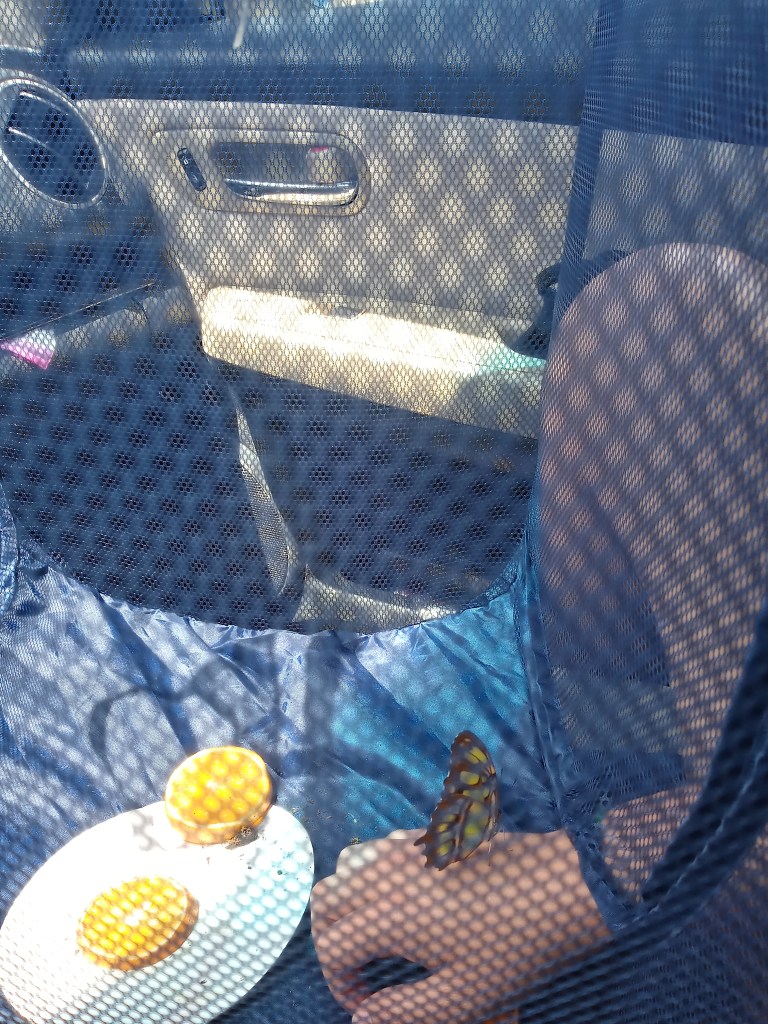
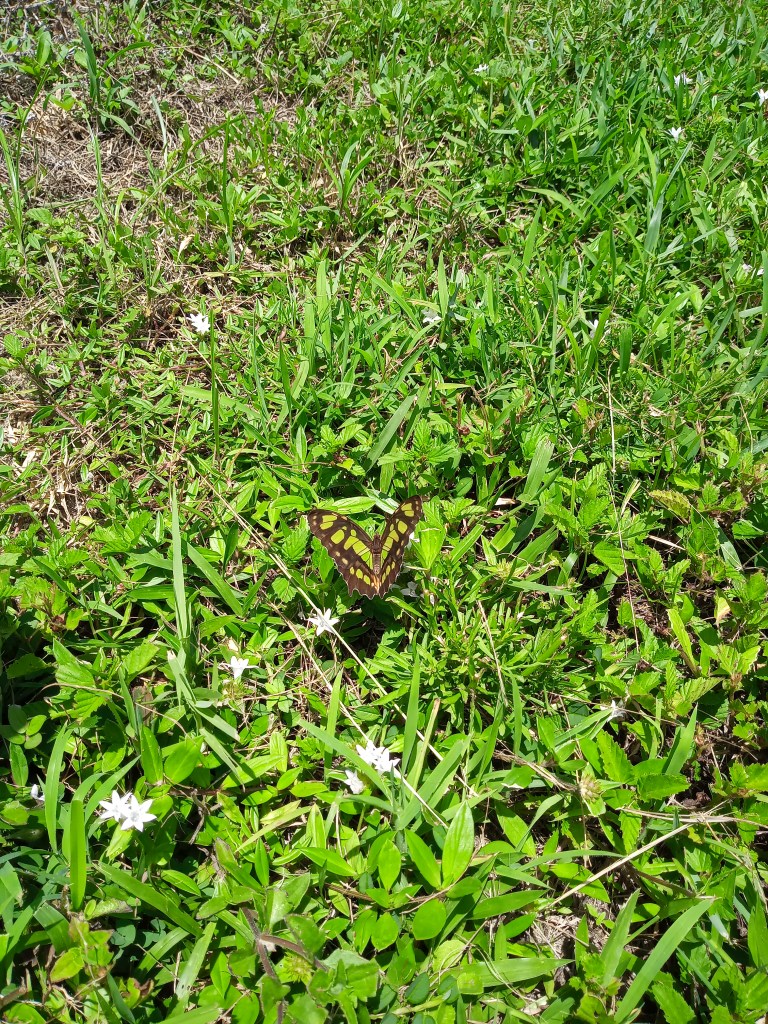
Today my daughter, “Teen Traveler”, and I set out to journey towards South Florida to release the malachite butterflies we have been raising from caterpillars for several weeks now. Since this species lives in South Florida, we knew we had to do the right thing when we purchased the caterpillars and get them into the South Florida vicinity to release them. Since the lifespan of the butterfly is usually only two to four weeks, we knew we shouldn’t keep them very long after their metamorphosis into a butterfly.
We drove two counties away and released them near an orange grove, as they feed on rotting fruit and flower nectar, and we wanted to ensure they had plenty to eat. We had a bit of a certain indescribable sense of sadness when we were driving to let them go into the wild.
My daughter said she was sorry to see them go. I explained to her that the butterflies are like many beautiful people we encounter during our lives. People come into our lives, and people go from our lives when we change schools, jobs, cities, etc…Life changes. Life changes a lot. The people that we are fond of don’t always stay around forever. Sometimes even death separates us, but we are somehow in some way, or in many ways, touched by their presence when we had them in our lives. I told my daughter that we can learn a lot about life from raising our butterflies.
Lessons Learned:
Like the butterflies that change forms from egg to several different types of caterpillars (instars) before assuming their final form, we, too, go through many changes and stages in our own lives. Sometimes we are not our most beautiful until we’ve gone through different stages within ourselves.
People come and go in our lives, like the butterflies we raise, and we enjoy them while they are here. We try think about their release date, as we can enjoy the moments with them while we have them. All the moments.
Sometimes the caterpillar hatchlings don’t make it to adulthood, despite our best efforts. Life is sometimes hard at times, but beautiful nonetheless.
You have to work hard to find a place to blend in and settle, finding what you need, before you can become a chrysalis. Working hard helps. These caterpillars certainly were VERY busy.
Sometimes we need rest, like a butterfly chrysalis, before we emerge as our best.
Sometimes we want to stay holding on the warm hand that protects us before we find the strength to move on to do what we know we ultimately have to do. Staying on that warm hand for a while is good for a while, but then we have to find our own way as we become adults and move on to college, etc..
Although the butterfly’s life is short, it always leaves behind something beautiful after it dies. The butterfly lives on, like us, in the generations that follow.
We need to be very patient. Good things often take time.
My daughter held the butterflies in her hand in the butterfly cage during the whole ride to our release site. She was so gentle with them that it was such a tender moment whenever I glanced her way. When the engine to the car stopped, she asked if she could release them in the car before we released them into the wild. She thought it would be fun if they flew around the inside of the car for a while. We let them out of the cage in the car, but they didn’t fly around for some reason. I’m thinking that the car air conditioner was a possible reason, as the butterflies really like the temperature to be above eighty degrees before they fly.
My daughter gently lifted the butterflies onto her hand again when it was time to release them outside. She waited until they both flew away, having the peace of mind that they were well, and she somehow added something back into the circle of life. She was relieved that she didn’t damage their wings or legs when she touched them, too. I knew she didn’t, but she was concerned.
On the way home, we found a beach with few people on it and enjoyed some time together in the warm blue waters, laughing together and finding some shells.
“You tucked me in, turned out the lights Kept me safe and sound at night Little girls depend on things like that
Brushed my teeth and combed my hair had to drive me everywhere You were always there when I looked back…
…And when I couldn’t sleep at night Scared things wouldn’t turn out right You would hold my hand and sing to me
Caterpillar in the tree How you wonder who you’ll be Can’t go far but you can always dream Wish you may and wish you might Don’t you worry hold in tight I promise you there will come a day Butterfly fly away, butterfly fly away, butterfly fly away Flap your wings now you can’t stay Take those dreams and make them all come true
Butterfly fly away, butterfly fly away We’ve been waiting for this day All along and knowing just what to do Butterfly, butterfly, butterfly, butterfly fly away…”
A simple vase with spindly sunflowers on a sunny day. A simple vase containing something ordinary in half bright sunlight and half shade caught my friend’s eye the other day while we were celebrating her birthday. She decided to take a picture of it, using the “portrait filter” on her i-phone. What resulted was a pretty picture of a simple vase of spindly sunflowers in the RIGHT amount of light. Not too much sun and not too much shade. The filter balanced it all at the right moment.
As I reflect upon all the photos I’ve taken through the years of the “perfect” flower in the perfect position with the perfect composition, only to be disappointed when the photo was “printed” on paper before the age of digital photography, I realize that the lighting is one of the most important part of the photo. What seemed like the BEST photo was disappointing at best so very often because of the lighting, or lack of proper lighting, on the subject. When I was in sixth grade, I had a “dark room” in our basement in which to develop black and white photography, like my father before me. There was an excitement that mounted while taking the film out of the camera in the proper conditions and developing it in a series of chemical baths, using only red light to work. The perfect picture came out imperfect so very often. If only I had more light, early morning light, or twilight when I had taken the picture…..
Such it is with life. Whenever we are faced with a decision, problem, situation, it is so very important to “shed a little light on it” or to look at it from a different angle. Perspective is everything. A little light and a fresh perspective reveals what something really is or what something reallycan be………
“Shed light on something”:
definition – to help to explain (something) ; to make it possible to understand or know more about (something
-Merriam-Webster Dictionary
definition – make free from confusion or ambiguity; make clear
– Thefreedictionary.com
(photo by C. Boucher with a portrait filter on an i-phone on a subject that was too dark under normal photography to be seen. The stem of the glass is “picture perfect” and is seen with the perfect amount of light.)
Light, a universal symbolism for goodness, intelligence, illumination of thought, the Divine, hope, and something positive makes us feel so good, like sunlight warming our shoulders during a chilly day at the beach. The RIGHT light from the right angle at the right time is crucial in photos and in life.
Life is good. Try to “shed a little light on it” to live fully and with intention today if you can. You can change the “exposure” (or amount of light the camera captures) of the picture of your life today and every day it you want.
Carpe diem, friends…………..
"Show me your love.
Show me your kind love
Share your compassion.
Let me feel mine
Shed your light all around me"
-"Shining Light" by Neil Young









 Carpe Diem with Caye